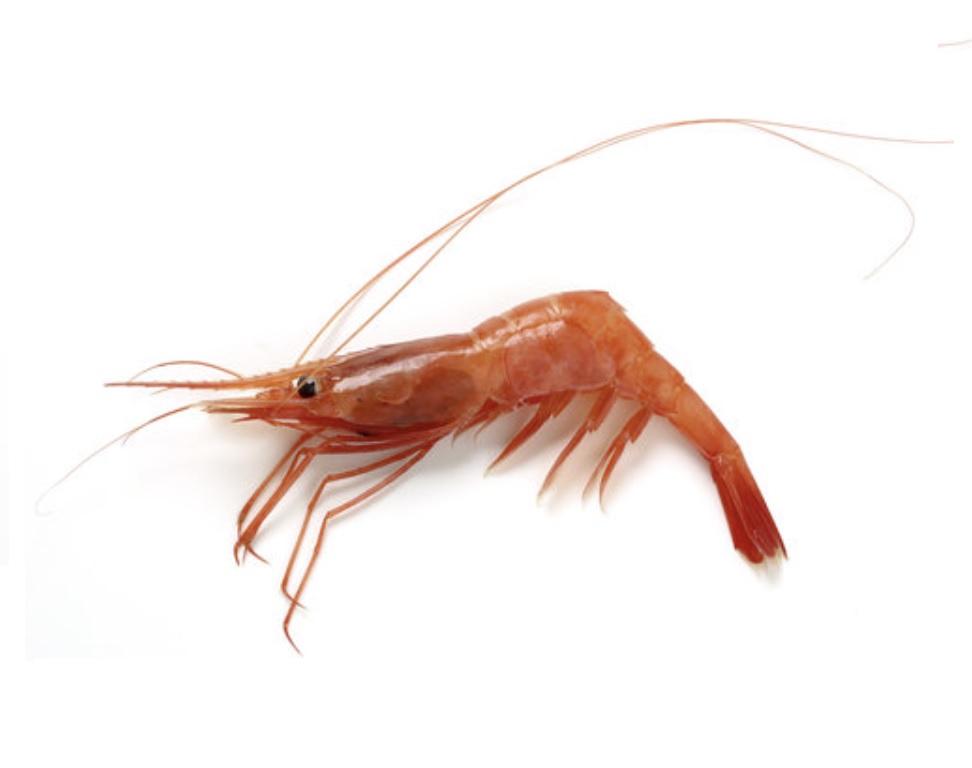
Like many ingredients, sweet shrimp is more commonly known by a popular name rather than its formal one. Its official name is the northern pink shrimp, but it is widely referred to as sweet shrimp. The term “sweet” comes from the Japanese name “Amaebi” (甘エビ), where “ama” means sweet, while its formal Japanese name is “Hokkoku Akaebi” (北国赤蝦). Sweet shrimp naturally has a reddish color even when alive and features a soft shell. Interestingly, freshly caught shrimp does not taste sweet. Its characteristic sweetness develops over time. This is because sweet shrimp, which inhabits deep, cold waters, contains a high level of proteolytic enzymes that continue to break down proteins after death, producing amino acids. This process creates a smooth, slightly melting texture known as “toromi” and enhances both umami and sweetness. Considering transportation and distribution time, the shrimp is often at its peak flavor when it reaches the market.